%20Polaroid.webp)
%20Flower.webp)
%20Scrap.webp)
%20Mouth.webp)

%20Earth.webp)
%20Scrap.webp)
%20Polaroid.webp)
%20Exclaim.webp)
%20Flower.webp)
%20Speaker.webp)
%20Hearts.webp)

%20Rabbit.webp)
%20Flower.webp)
%20Butterfly.webp)


We build individual and collective power through education, facilitation, and skill sharing. By investing in people and communities, we strengthen the foundations of climate action.
We ensure resources flow where they're needed most, redistributing financial and material support to enable effective climate action at all levels.
We create and share intersectional knowledge that bridges lived experiences, traditional wisdom, and climate science, developing the deep understanding needed for meaningful change.
We craft and amplify powerful narratives that inspire hope, nurture collective optimism, and mobilize communities for climate action. Through stories, we connect individual action to collective impact.
We support the healing of both land and community, strengthening our connection to place and each other. Through regenerative practices, we rebuild the resilience needed for long-term change.
When trust-based funding meets their ideas and leadership, transformative change becomes possible. From restoring degraded ecosystems to organizing communities around clean water, food security, and climate justice, youth are responding to crises that are immediate, personal, and deeply rooted in their daily realities. Yet, despite being on the frontlines of climate impacts, Global South youth remain the most underfunded actors in climate action.
This is not a lack of ideas, ambition, or capacity. This is a funding failure.
Through RE!Granting, I have seen firsthand how youth-led initiatives in the Global South operate with extraordinary efficiency and innovation. Many are informal groups or individuals working outside traditional nonprofit structures. They are excluded because funding systems were never designed with them in mind. Complex application processes, rigid compliance requirements, and a preference for registered organizations with long track records systematically shut out those closest to the problem.
These young leaders bring contextual knowledge that cannot be imported, scaled, or replicated from elsewhere. They understand the social, cultural, and political dimensions of climate challenges in their communities. Their solutions are often low-cost, community-driven, and designed for long-term resilience rather than short-term visibility.
What is most striking is what happens when trust-based funding is made available. Even modest grants can unlock disproportionate impact: projects scale, partnerships form, confidence grows, and communities rally behind youth leadership.
Funding legitimizes youth as decision-makers, problem-solvers, and leaders in spaces where they are too often sidelined.
Yet funding alone is not enough. How we fund matters. Global South youth need flexible, accessible, and dignified funding models that recognize different ways of organizing and measuring success. They need funders willing to listen, learn and share power; not extract data or impose external definitions of impact.
If we are serious about climate justice, we must confront the imbalance at the heart of the climate finance system.
The regions that have contributed least to the climate crisis should not be expected to solve it with the fewest resources. Supporting Global South youth is about correcting that imbalance and acknowledging that the future of climate action depends on those who are already living its consequences.
At RE!Granting, Global South are not the beneficiaries of climate action, they are its architects. The question is no longer whether they deserve funding. It is whether the climate movement can afford to continue without them.
For over three decades, the world’s highest decision-makers have gathered under the United Nations climate process to negotiate commitments intended to safeguard ecosystems, reduce emissions, and respond to the accelerating climate crisis. Each year at the UN Climate Change Conferences (COPs), governments shape policies that affect our futures across the globe. The reality is that despite our best efforts, our worldviews are often left out of the final agreements that shape climate policy.
Over the last 30 years of this process, Indigenous Peoples have been involved through our designated constituency: Indigenous Peoples Organizations (IPOs), often fighting for basic inclusion of IPs. The process has expanded but power within it has not meaningfully shifted. Indigenous Peoples protect some of the world’s most biodiverse and ecologically vital territories, but Indigenous youth remain significantly underrepresented in the rooms where these global decisions are negotiated.
Re-Earth Initiative is proud to launch our Climate Policy Fellowship for Indigenous Youth. A year-long capacity-building and policy engagement program designed to support Indigenous youth in meaningfully engaging in international climate negotiations under the UNFCCC.
“Climate governance cannot claim legitimacy while excluding those who safeguard the world’s most critical ecosystems. The REI Climate Policy Fellowship for Indigenous Youth is about redistributing access, strengthening policy capacity, and supporting sustained Indigenous youth leadership within multilateral climate processes.”
Sofia Luna Quispe (Quechua, Peru)
Policy Lead at Re-Earth Initiative
International climate negotiations are highly technical, resource-intensive, and politically complex. For Indigenous youth, barriers to engagement include the high financial costs for participation as well as limited access to technical policy training for understanding complex negotiation language and procedures. The REI Climate Policy Fellowship seeks to respond directly to this access gap.
The Fellowship is designed as a 10-month program running from March to December 2026. The inaugural cohort will include four Indigenous youth fellows from across the seven sociocultural regions.
Each fellow will be assigned one of four negotiation tracks to follow throughout the program:
As a part of the program, fellows will receive:
Fellows are expected to engage in movement coordination spaces, participate in public communications and media efforts (where appropriate), as well as actively contribute to the production of briefs, policy analysis, and other materials prior and after the conferences.
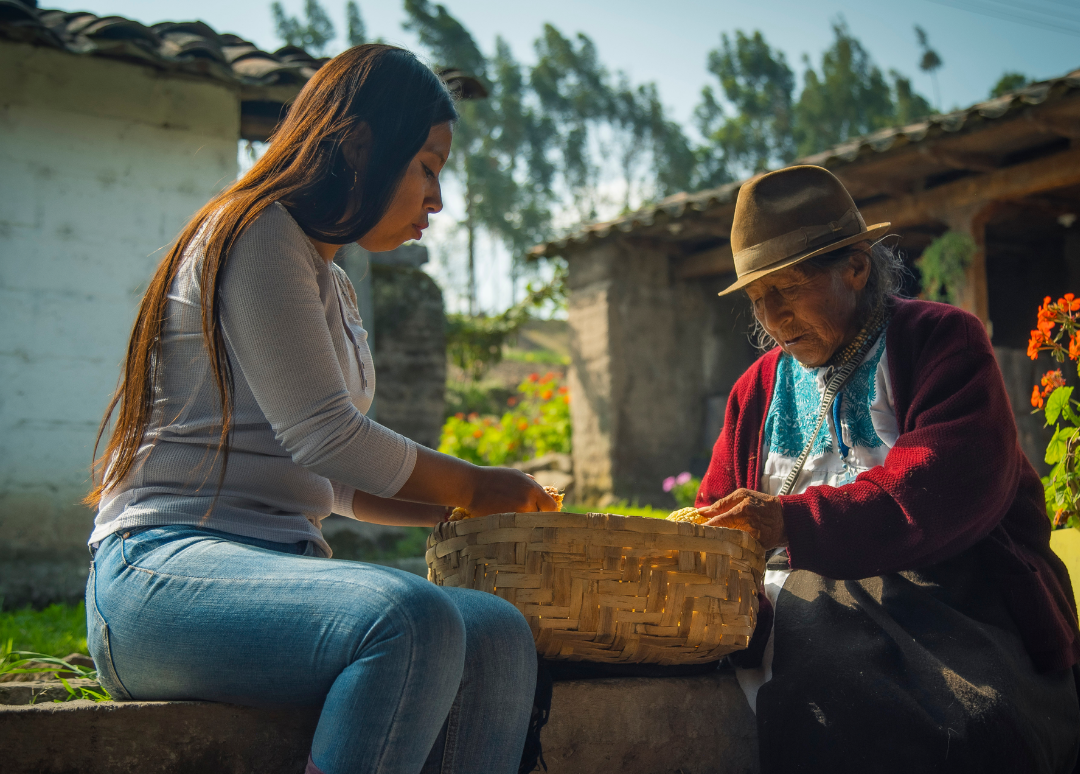
"Indigenous Knowledge is vital in climate policy. Without the wisdom of the people who know the land best, we will keep on replicating the same extractivist tactics that harm our communities time and time again"
Xiye Bastida, Otomí-Toltec
Co-Founder and Executive Director at Re-Earth Initiative
The REI Climate Policy Fellowship reflects Re-Earth Initiative’s broader commitment to democratizing climate policy spaces and investing in diverse youth leadership that is politically grounded and community-rooted.
We believe that meaningful transformation of global climate governance requires shifting who holds knowledge, who shapes negotiations, and who has sustained access to these spaces.
By supporting Indigenous youth policy leadership, we hope to contribute to a future in which climate negotiations are more representative, more accountable, and more aligned with frontline realities.
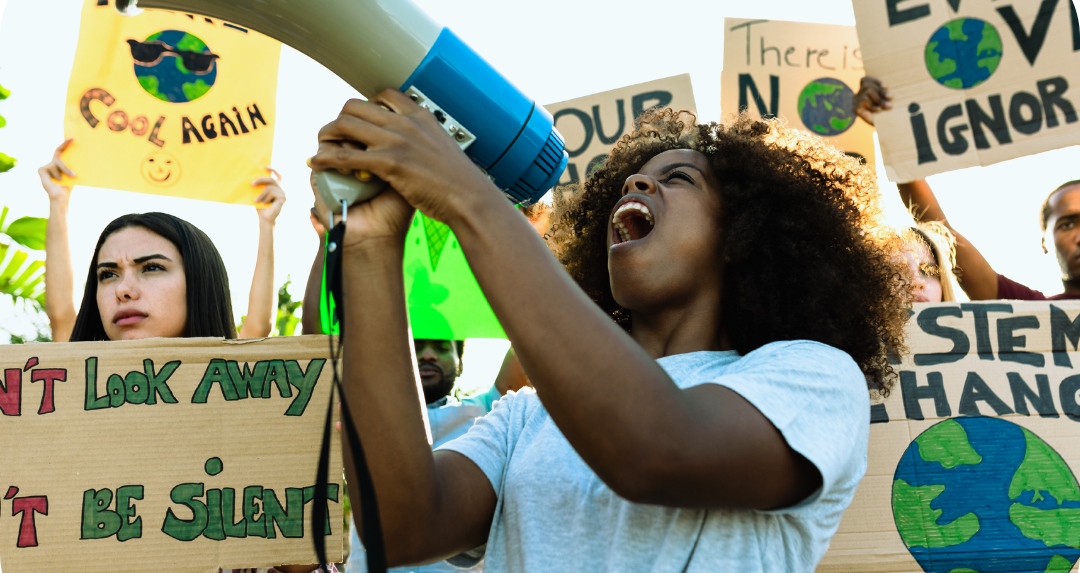
Applications for the 2026 cohort are NOW OPEN and will be reviewed on a rolling basis until March 16th.
For questions regarding eligibility or the application process please contact sofia@reearthin.org
These pages summarize hundreds of hours of work across multiple corners of the world. Our multicultural group of young people got together to build bridges of interconnectedness between our communities and the global climate movement, and every day strives to serve our current and future generations.
We continuously learn from each other, from our movement peers, and from our elders. Some of this growth is registered as the tangible results of our year 2024 in the document below. Thank you for your interest and support always!
Written by: Daniela Bobadilla, Xiye Bastida, Theresa Rose Sebastian, Sofía Luna, Gabriela Sánchez, Niklas Todt, Isabel Mejía Roberts
Design: Darsh Vatsa and Karin Watson Ferrer
Edition: Daniela Bobadilla




Understand the importance of climate policy advocacy and how to get involved.

Learn effective strategies for engaging communities in climate action initiatives.

Discover various renewable energy solutions that can help reduce reliance on fossil fuels.