
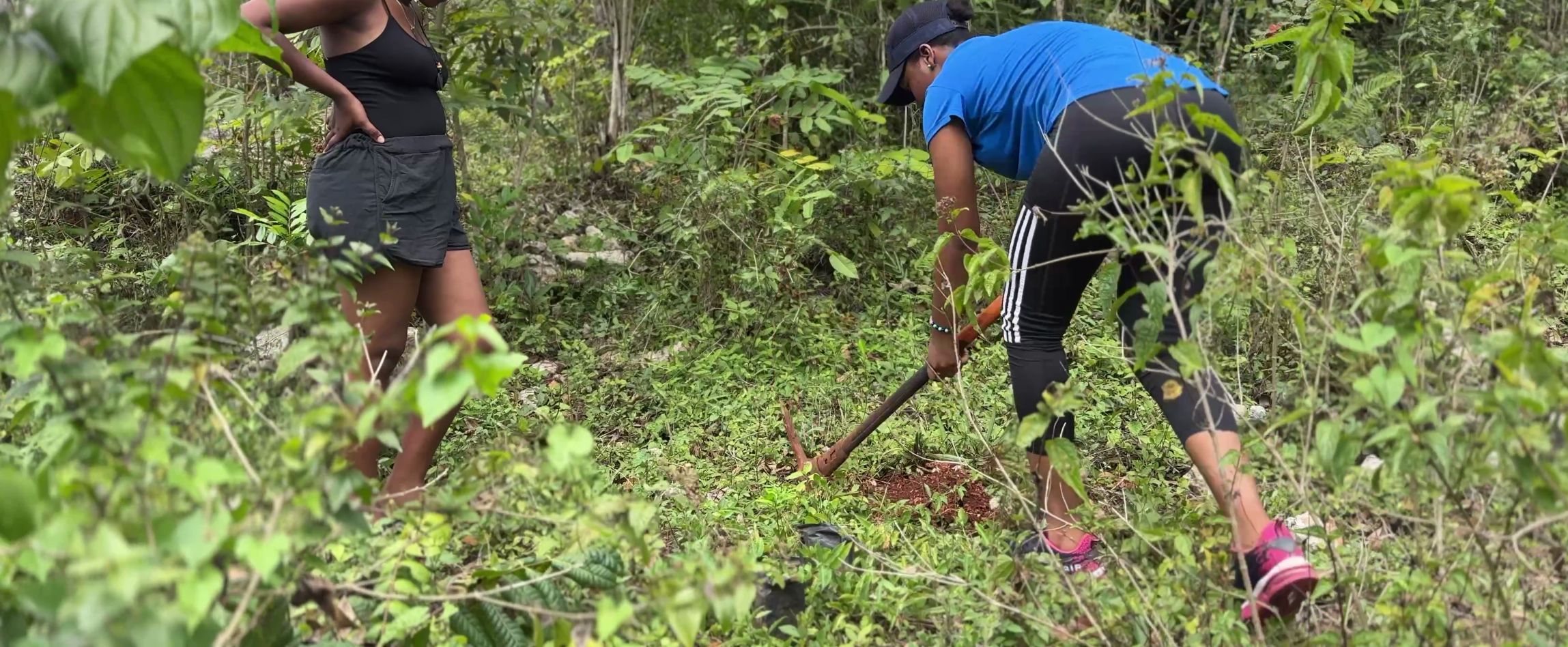
Across the Global South, young people are leading climate action.
When trust-based funding meets their ideas and leadership, transformative change becomes possible. From restoring degraded ecosystems to organizing communities around clean water, food security, and climate justice, youth are responding to crises that are immediate, personal, and deeply rooted in their daily realities. Yet, despite being on the frontlines of climate impacts, Global South youth remain the most underfunded actors in climate action.
This is not a lack of ideas, ambition, or capacity. This is a funding failure.
Through RE!Granting, I have seen firsthand how youth-led initiatives in the Global South operate with extraordinary efficiency and innovation. Many are informal groups or individuals working outside traditional nonprofit structures. They are excluded because funding systems were never designed with them in mind. Complex application processes, rigid compliance requirements, and a preference for registered organizations with long track records systematically shut out those closest to the problem.
Funding Global South youth is a strategic investment.
These young leaders bring contextual knowledge that cannot be imported, scaled, or replicated from elsewhere. They understand the social, cultural, and political dimensions of climate challenges in their communities. Their solutions are often low-cost, community-driven, and designed for long-term resilience rather than short-term visibility.
What is most striking is what happens when trust-based funding is made available. Even modest grants can unlock disproportionate impact: projects scale, partnerships form, confidence grows, and communities rally behind youth leadership.
Funding legitimizes youth as decision-makers, problem-solvers, and leaders in spaces where they are too often sidelined.
Yet funding alone is not enough. How we fund matters. Global South youth need flexible, accessible, and dignified funding models that recognize different ways of organizing and measuring success. They need funders willing to listen, learn and share power; not extract data or impose external definitions of impact.
If we are serious about climate justice, we must confront the imbalance at the heart of the climate finance system.
The regions that have contributed least to the climate crisis should not be expected to solve it with the fewest resources. Supporting Global South youth is about correcting that imbalance and acknowledging that the future of climate action depends on those who are already living its consequences.
At RE!Granting, Global South are not the beneficiaries of climate action, they are its architects. The question is no longer whether they deserve funding. It is whether the climate movement can afford to continue without them.
